
Introduction
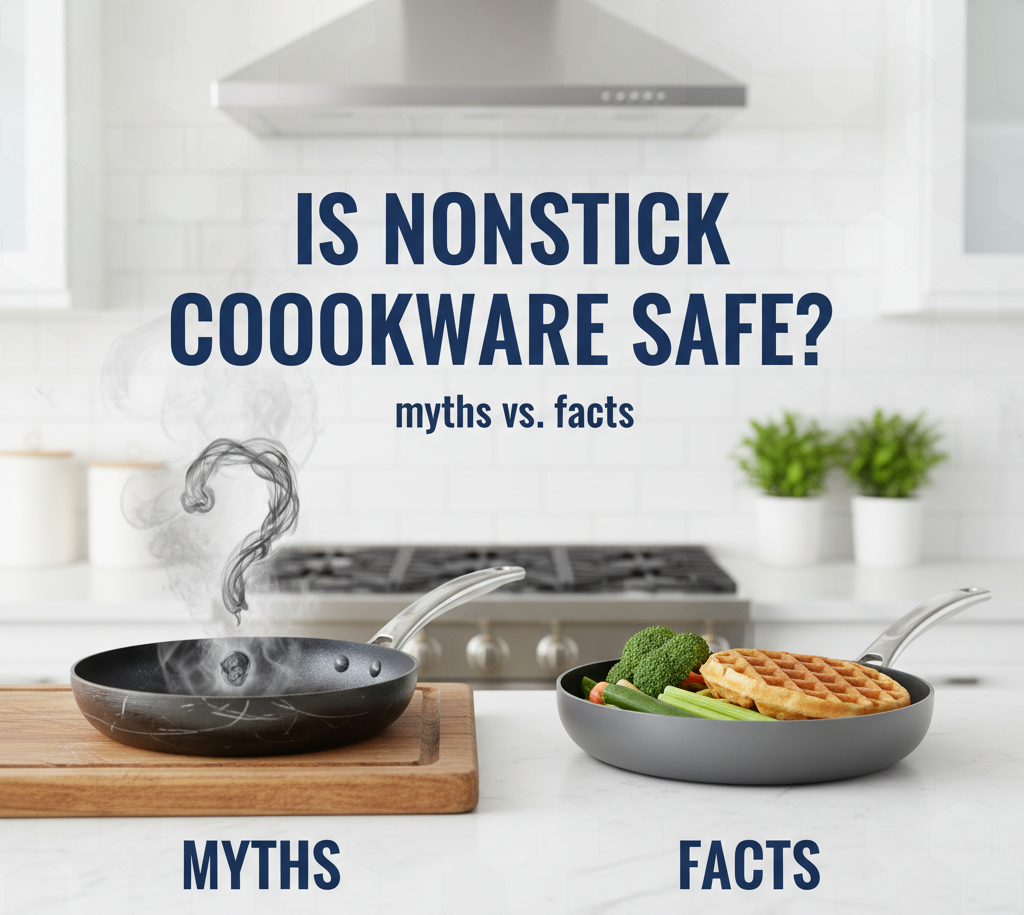
When it comes to cooking, people often argue about what kind of cookware is best. Some say stainless steel is the strongest. Others love cast iron because it lasts forever. But when it comes to quick, easy, and healthy cooking, nothing beats a nonstick cookware set. These sets are found in homes around the world. Families use them for making pancakes, stir-fries, curries, or even eggs with little to no oil. But along with their popularity, many myths have grown about them. Some people wonder, “Are nonstick cookware sets really safe?”
In this blog, we will explore the top myths and facts about nonstick cookware. We’ll also look at how they are used in everyday life, why families prefer them, and how they have become a must-have for modern kitchens. By the end, you’ll know exactly why a nonstick cookware set is safe, practical, and one of the smartest cooking tools you can own.
Why Nonstick Cookware Set is So Popular
The biggest reason a nonstick cookware set is loved worldwide is because it makes cooking easier. Traditional pans often need a lot of oil or butter to keep food from sticking. This makes meals greasy and sometimes unhealthy. Nonstick pans, on the other hand, have a smooth coating that keeps food from clinging to the surface. This means you can fry an egg with just a drop of oil or make dosas without smearing ghee across the pan.
They’re also easier to clean. With steel or cast iron, you may spend a long time scrubbing burned spots. With nonstick, most stains wipe away in seconds. For busy families, students, or anyone with limited time, this is a huge help. Nonstick cookware sets also look stylish, with colorful exteriors and sleek designs that make your kitchen feel modern.
Myth 1: All Nonstick Cookware Is Unsafe
One of the most common fears is that all nonstick cookware is unsafe. People worry that harmful chemicals might leak into food during cooking. This belief started many years ago when old nonstick pans were made with certain chemicals like PFOA. Over time, studies showed that PFOA could be harmful. But here’s the truth: modern nonstick cookware sets are PFOA-free. Today’s brands use safe materials and strict standards, so the cookware is safe for everyday use.
In fact, many health experts agree that a nonstick pan used properly is perfectly fine. The key is to buy from trusted brands and avoid super cheap sets that may not follow safety rules. So, the fact is: modern nonstick cookware sets are safe for your family’s meals as long as they are used correctly.
Myth 2: Nonstick Coatings Peel Off Easily
Another myth says that nonstick coatings peel off after just a few uses. People imagine their food filling with flakes of coating every time they stir a curry. While it is true that nonstick pans can wear out over time, this usually happens when they are not cared for properly. For example, using metal spoons, knives, or forks on a nonstick surface can scratch the coating. Washing it with steel scrubbers can also ruin the finish.
But if you use wooden, silicone, or plastic spoons and wash gently with a soft sponge, your nonstick cookware set can last for years. Many families have pans that are 5–7 years old and still work perfectly fine. The fact is, the durability depends on how well you treat the cookware, not the material itself.
Myth 3: Nonstick Cookware Can’t Handle High Heat
Many people believe that a nonstick cookware set cannot handle high temperatures and that it releases harmful gases when heated. This myth is partly true but also misunderstood. Yes, if you heat a nonstick pan on extremely high flames for a long time, it may damage the coating. But normal cooking—like frying vegetables, simmering curries, or making chapatis—does not reach that dangerous level.
Most modern nonstick cookware is designed to withstand medium to medium-high heat without any issues. The fact is: as long as you avoid keeping an empty nonstick pan on a high flame for a long time, it is perfectly safe to use. For regular cooking, there is no danger at all.
Everyday Uses of a Nonstick Cookware Set
Now let’s look at how a nonstick cookware set fits into daily life. Families love it for breakfast—fluffy omelets, crisp dosas, or golden pancakes come out perfect every time. Lunch and dinner are easier too, because curries, stir-fries, and rice dishes don’t stick to the pan. Even desserts like caramel or halwa are easier to prepare in a nonstick kadai because the sugar doesn’t burn as quickly.
For health-conscious families, nonstick is especially useful. You can reduce your oil use by half or more without losing taste. This makes meals lighter and better for the heart. That’s why many people on weight-loss journeys choose a nonstick cookware set—it supports healthier eating without extra effort.
Myth 4: Nonstick Cookware Wears Out Too Fast
Many people believe that a nonstick cookware set will only last a few months. They think the coating fades quickly and then the pans are useless. The truth is that nonstick cookware can last for many years if used with care. The lifespan depends more on how you treat it than on the cookware itself. For example, if you heat the pan on a very high flame every day or use sharp spoons, the surface may wear faster. But if you cook on medium heat and use soft utensils, it will serve you well for a long time.
A good-quality nonstick cookware set usually lasts three to five years, sometimes even longer. Think of it like shoes—cheap ones may wear out fast, but a good brand lasts longer if you take care of them. So the fact is: nonstick cookware is not weak; it is reliable when used properly.
Myth 5: Nonstick Cookware Is Bad for Health
This is one of the most powerful myths. Some people think food cooked in a nonstick cookware set is harmful because of the coating. But studies show that modern nonstick coatings are safe for everyday cooking. The danger only comes if a pan is overheated until smoke rises, which rarely happens in normal kitchen use.
In fact, nonstick cookware can be healthier than other pans because it needs less oil. Imagine cooking potatoes with just a spoon of oil instead of half a cup. Your food becomes lighter and better for your body. Families trying to eat healthier, people with cholesterol problems, and those who want to lose weight all benefit from using a nonstick cookware set. So the fact is: nonstick is not bad for health—it actually supports healthy living.
Myth 6: Nonstick Cookware Is Not Eco-Friendly
Some people argue that nonstick cookware harms the environment. While older types of nonstick may have used chemicals that were not eco-friendly, modern cookware is changing. Many brands today make eco-friendly nonstick cookware sets that are PFOA-free and safe for the earth. Some even use recycled materials for handles and packaging.
Also, because nonstick cookware lasts for years, you don’t need to keep replacing it. Fewer replacements mean less waste. And since it uses less oil and less water for cleaning, it even reduces resource use. The fact is: modern nonstick cookware is much more sustainable than people think.
Why Indian Kitchens Love Nonstick Cookware Sets
In Indian homes, cooking often means long hours in the kitchen. From frying puris to simmering dal, making rotis, or preparing rich gravies, food tends to stick and burn in regular pans. This is why a nonstick cookware set is so loved in Indian kitchens. It helps prepare meals faster, with less mess and less stress.
Take dosas, for example. On a traditional iron tawa, you may need to spread a lot of oil or ghee to prevent sticking. But on a nonstick tawa, you can make crisp, golden dosas with very little oil. The same is true for parathas, pakoras, and even curries. Housewives and chefs appreciate how nonstick cookware reduces effort, saves time, and keeps food looking beautiful.
For families with children, a nonstick cookware set is also safer. Kids learning to cook can try simple dishes without worrying about food burning and sticking. It makes cooking a fun activity rather than a stressful one.
How to Choose the Right Nonstick Cookware Set
With so many options available, it can be tricky to pick the right set. Here are some simple tips to help you:
-
Family Size: A small family can go for a 3–5 piece nonstick cookware set, while larger families may need a 10–12 piece set.
-
Cookware Types: Make sure the set has the pans you need most, like a frying pan, kadai, saucepan, and tawa.
-
Handles: Look for strong, heat-proof handles that are easy to grip.
-
Lids: Glass lids are handy because you can see the food while it cooks.
-
Safety: Always check if the set is PFOA-free.
-
Compatibility: If you use induction stoves, make sure the cookware works on them.
-
Budget: Choose according to your needs—there are affordable sets for daily cooking and luxury sets for gifting or special occasions.
Shopping online makes this process easier. On websites like Crockerykart, you can compare designs, read reviews, and pick the nonstick cookware set that best fits your kitchen.
Buyer’s Guide: Affordable vs. Premium
When buying, many families wonder: should we buy a budget set or a premium one? The answer depends on your needs. Affordable sets are great for daily use, especially for students or small families. They are light, easy to clean, and simple to use. Premium nonstick cookware sets, on the other hand, come with stronger coatings, better designs, and sometimes even colorful finishes that brighten up your kitchen.
For weddings or gifts, a premium set makes a great impression. For everyday meals, an affordable set does the job well. The fact is: no matter which one you choose, a nonstick cookware set will always make your cooking easier and healthier.
How to Take Care of a Nonstick Cookware Set
Buying a nonstick cookware set is only half the story. The other half is learning how to care for it properly. Nonstick pans are strong, but they need a little kindness. The first rule is never to use sharp or metal spoons on them. A steel ladle or knife can scratch the coating and reduce its life. Instead, always use wooden, silicone, or plastic spoons. These are gentle on the surface and keep it smooth.
The second rule is about washing. Many people throw their pans into the sink with other heavy vessels. This can cause dents or scratches. Instead, wash them gently with a soft sponge and mild soap. Avoid steel scrubbers, as they can damage the coating. If food gets stuck, soak the pan in warm water for a few minutes before cleaning.
The third rule is about heat. A nonstick cookware set works best on low to medium flame. High flames can damage the coating and even burn food unevenly. So, when cooking, remember that patience pays off. Let the pan heat slowly, and your food will taste even better.
Everyday Care Tips That Make a Big Difference
Small habits can make your cookware last much longer. For example, never cut vegetables directly inside a nonstick pan. The knife can scratch the coating. Also, avoid stacking pans on top of each other without protection. If you must stack them, place a soft cloth or paper towel between them. This prevents scratches.
Another tip is to avoid storing food in a nonstick pan for long hours. Acidic foods like tomato curry or lemon juice can slowly wear down the coating. Instead, transfer food to a steel or glass container once it’s cooked. With these simple steps, your nonstick cookware set can stay shiny and smooth for years.
How Nonstick Cookware Helps Families
Families today are busier than ever. Parents rush to work, children rush to school, and evenings are filled with homework and chores. In such times, a nonstick cookware set feels like a blessing. It saves time because food doesn’t stick or burn. It saves effort because cleaning is quick. And it saves money because you use less oil.
For parents, cooking becomes easier and healthier. For children, it means lighter meals with less grease. And for grandparents, it means less standing by the stove because food cooks faster. A simple set of pans can truly change the way a family experiences food together.
Students and Working Professionals
Life in hostels or rented flats is often tough. Students and young professionals don’t always have time or space for big kitchens. A compact nonstick cookware set helps them cook meals quickly without needing too many tools. With one frying pan and one kadai, they can make noodles, curries, or rice with little effort.
Because the food doesn’t stick, beginners feel more confident in cooking. They don’t have to worry about burning food or scrubbing pans. This makes learning to cook less scary and more fun. A nonstick cookware set gives independence to young adults who are starting life away from home.
Nonstick Cookware for Health-Conscious People
More and more people are becoming health-conscious today. They want to reduce oil and eat lighter meals. A nonstick cookware set is perfect for them. You can grill fish with just a drizzle of oil, make sabzis with less ghee, or cook rotis without butter. Every drop of oil saved means fewer calories and a healthier lifestyle.
Doctors often suggest people with cholesterol or heart issues to avoid oily food. Nonstick cookware makes it possible without sacrificing taste. Families who are on a fitness journey also find it easier to cook meals that fit their diet plans. In this way, nonstick cookware supports health goals while keeping food delicious.
A Great Gift Idea
When you think of gifting, it’s easy to choose flowers, sweets, or showpieces. But practical gifts are remembered longer. A nonstick cookware set is one such gift. It is useful, stylish, and thoughtful. Newly married couples love it as they set up their first kitchen. Families moving into a new home appreciate it because it makes daily cooking easier.
Unlike showpieces that gather dust, a nonstick cookware set is used every single day. Each time your loved ones cook in it, they’ll remember your thoughtful gesture. That’s why cookware is becoming a popular gift at weddings, festivals, and housewarmings.
The Future of Cookware
Cooking is always evolving, and so is cookware. The future of the nonstick cookware set looks even brighter. Companies are now making pans with ceramic coatings, stone finishes, and eco-friendly materials. These are not only safe but also stylish. Some pans even come with temperature indicators to show when they are ready for cooking.
We may also see smart cookware in the future, with sensors that connect to phones and guide you while cooking. But no matter how advanced cookware becomes, the nonstick set will remain a favorite because of its simple promise: easy, healthy, and tasty meals for everyone.
FAQs About Nonstick Cookware Sets
Q1. Can I use metal spoons with a nonstick cookware set?
No, it is better to use wooden, silicone, or plastic spoons to avoid scratches.
Q2. Is a nonstick cookware set dishwasher safe?
Some are, but handwashing with a soft sponge is always better to increase lifespan.
Q3. Can I cook without any oil at all?
Yes, you can. But adding a tiny bit of oil improves taste and texture.
Q4. How long does a nonstick cookware set last?
Usually 3–5 years with proper care, sometimes longer.
Q5. Are all nonstick pans safe?
Modern branded sets are safe and PFOA-free. Always buy from trusted sellers.
Final Thoughts
Cooking is not just about food. It’s about care, comfort, and the joy of sharing meals with loved ones. A nonstick cookware set makes this process easier and more enjoyable. It saves time, reduces oil, and keeps your kitchen stress-free. Myths about safety may have scared people in the past, but today’s nonstick cookware is safe, eco-friendly, and reliable.
Whether you are a parent, student, or professional, a nonstick cookware set can make life better. It is not just cookware—it is a tool for healthier meals, faster cooking, and happier families. So, the next time you want to upgrade your kitchen or choose a meaningful gift, think of a nonstick cookware set. With so many designs and options available online, finding the perfect one for your home has never been easier.



Leave A Comment