
Introduction: Why Cast Iron Matters in Indian Homes
Indian cooking is rich, diverse, and full of flavor. From slow-cooked dals to sizzling curries, from crispy dosas to deep-fried pakoras, the Indian kitchen is always alive with heat, aroma, and tradition. To keep up with such cooking, we need strong, reliable cookware. This is where cooking with cast iron cookware becomes special.
Cast iron has been used in Indian homes for centuries. Our grandparents often relied on cast iron kadais (woks) and tawas (flat pans) for daily meals. They knew its value long before modern nonstick pans entered the market. Today, people are coming back to cast iron because it is durable, healthy, and perfect for Indian recipes.
This blog explores the top benefits of cooking with cast iron cookware, especially for Indian kitchens. By the end, you will see why this cookware deserves a permanent place in your home.
The Heritage of Cast Iron cookware in India
In old times, Indian kitchens were filled with cast iron cookware vessels. Curries bubbled in heavy kadais, dosas were spread on flat tawas, and chapatis puffed on skillets. These vessels were treasured because they lasted for decades. Unlike today’s pans that lose their coating, cast iron grew stronger with every use.
Cooking with cast iron was also a family tradition. Mothers passed down their seasoned pans to daughters. These vessels carried not only flavors but also memories. Even today, many families still keep their grandmother’s cast iron cookware safe and shining.
By returning to cast iron, modern homes are also returning to these roots. It is not just cookware—it is heritage.
What Makes Cast Iron Different from Other Cookware?
Every kitchen has many options—steel, aluminum, nonstick, or ceramic. But cooking with cast iron cookware has its own unique power. The difference lies in the material. Cast iron is heavy, thick, and holds heat longer than most metals. Once hot, it cooks food evenly and keeps it warm for longer.
Unlike nonstick pans, cast iron does not have harmful coatings. With proper seasoning, it creates its own natural nonstick layer. This means you can cook with less oil without worrying about chemicals mixing with food.
Also, cast iron gets better with age. The more you use it, the smoother and stronger it becomes. Other cookware gets weaker with time, but cast iron grows more reliable.
Why Cast Iron is Perfect for Indian Kitchens
Indian cooking needs cookware that can handle high heat, deep frying, slow simmering, and sometimes even baking. Cooking with cast iron cookware is ideal because:
-
It can take strong flames without damage.
-
It keeps oil hot for frying puris, pakoras, or samosas.
-
It cooks curries slowly, letting spices blend well.
-
It makes crisp dosas, rotis, and parathas.
-
It even works in ovens for baking breads or roasting vegetables.
In short, cast iron matches the demands of Indian kitchens. Whether you are cooking a quick tadka or a festival feast, it will serve you well.
Health Benefits of Cooking with Cast Iron
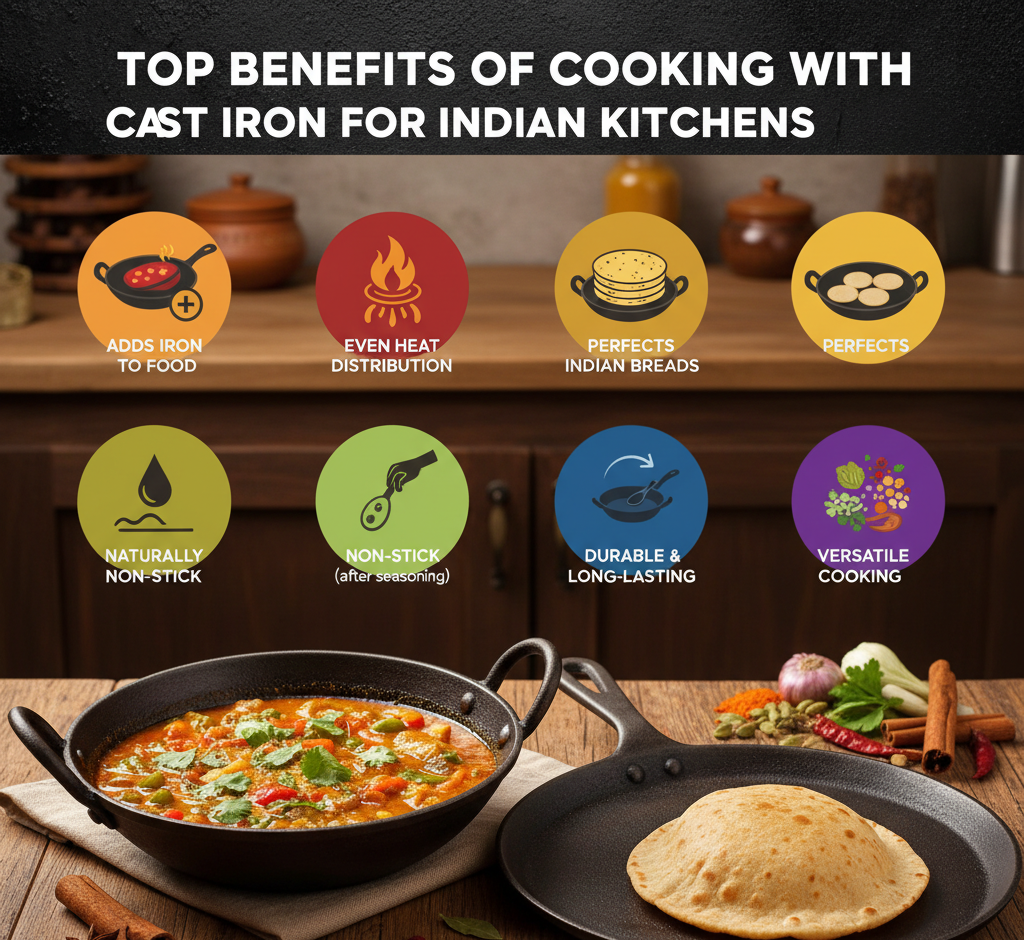
One of the biggest reasons people love cooking with cast iron cookware is health. This cookware adds small amounts of iron to your food. For Indians, especially women and children, this is valuable because iron deficiency is common. Simple meals like dal, sabzi, or even dosa made in cast iron can increase iron intake naturally.
Cast iron also allows you to cook with less oil. The seasoned surface is smooth enough to prevent food from sticking. This means you can prepare lighter meals without losing flavor.
Unlike nonstick pans, cast iron does not release harmful fumes when heated. It is safe, natural, and good for your family.
Durability and Longevity
If you want cookware that lasts for decades, cast iron is the answer. With proper care, a single kadai or tawa can serve generations. Unlike aluminum that bends or nonstick that scratches, cast iron grows stronger.
Many Indian households still use pans that are 40 or 50 years old. Cooking with cast iron is not just about today’s meal—it is about building a treasure for the future.
Heat Retention: A Secret to Perfect Indian Cooking
One of the biggest strengths of cooking with cast iron is how well it holds heat. Indian recipes often need slow cooking or frying at steady temperatures. For example:
-
When making dal tadka, you need to simmer lentils so that they become creamy. Cast iron cookware kadai keeps the heat even, so the dal cooks slowly and absorbs all flavors.
-
While frying bhajiyas or pakoras, the oil must stay hot. If the oil cools, snacks soak up oil and turn soggy. A cast iron pan keeps the oil hot and makes pakoras crispy.
-
For rotis and parathas, even heat across the surface is important. Cast iron tawas ensure every corner cooks evenly, giving perfect browning.
Because it holds heat for so long, cast iron also keeps food warm after cooking. This is useful when serving guests.
Natural Nonstick Without Chemicals
Many people today prefer nonstick pans, but they come with risks. Coated pans can release chemicals when scratched or overheated. Cast iron cookware , however, has its own natural nonstick surface when seasoned properly.
Seasoning means applying a thin layer of oil and heating the pan. Over time, the oil bonds with the iron and makes a smooth layer. This surface prevents food from sticking.
With proper seasoning, you can fry eggs, make dosas, or sauté vegetables in cast iron with minimal oil. It is safe, healthy, and free from harmful coatings.
Adds Iron to Food Naturally
Health experts often remind us that iron deficiency is a serious problem in India. Many women and children suffer from anemia. A hidden benefit of cooking with cast iron cookware is that it increases the iron content in food.
For example:
-
Tomato curries cooked in cast iron absorb extra iron.
-
Tamarind-based dishes or rasam pick up more iron due to their acidic nature.
-
Even simple chapatis cooked on a cast iron cookware tawa can have more iron.
This makes cast iron cookware almost like a natural supplement. Instead of buying pills, families can improve health just by cooking daily meals in cast iron.
Ideal for Indian Dishes
Indian cooking is diverse, and cast iron supports every style. Let’s see how:
-
For South Indian kitchens: A cast iron cookware dosa tawa gives the best crisp dosas. Nonstick pans may tear or make soft dosas, but cast iron gives the authentic crunch. Idlis and appams also turn out better when steamed in cast iron molds.
-
For North Indian kitchens: From parathas to rotis, cast iron tawas are unbeatable. Curries like rajma or kadhi taste richer when slow-cooked in cast iron kadais.
-
For snacks and street food: Samosas, puris, and jalebis fry beautifully in cast iron pans because they keep oil at the right temperature.
-
For festive cooking: During Diwali or Holi, when families cook for hours, cast iron’s durability shines. It never warps, bends, or loses strength.
In every part of India, cast iron adapts to traditional recipes perfectly.
Eco-Friendly and Sustainable
Today, many people are concerned about plastic, waste, and chemical pollution. One benefit of cooking with cast iron is that it is eco-friendly. Unlike nonstick cookware that needs replacing every few years, cast iron cookware lasts for decades. This reduces waste.
Cast iron is made from natural materials, and it can be recycled endlessly. By using cast iron, you reduce your carbon footprint while enjoying healthier meals.
Cost-Effective in the Long Run
Some people think cast iron is expensive. But if you compare, it is actually cheaper in the long run. A nonstick pan may last 2–3 years before its coating wears out. After that, you must buy a new one.
A cast iron pan, if cared for, can last a lifetime. Even if it looks rusty, you can clean and re-season it. Many families pass it from one generation to the next. So, investing once saves money for years.
Cooking with Less Oil
Indian food is often linked with rich gravies and fried items. But modern families prefer lighter, healthier meals. Cooking with cast iron cookware helps in this goal.
Because of its seasoned surface, cast iron cookware requires very little oil. You can cook stir-fried vegetables, rotis, or even omelets with just a few drops. This not only reduces calories but also saves money on oil.
Enhances Flavor Over Time
One unique charm of cast iron is how it improves the taste of food. Over time, as the seasoning grows, the pan develops a special flavor. Curries taste deeper, dosas turn crispier, and rotis get a smoky edge.
Many chefs say that cast iron “remembers” flavors. This is why dishes cooked in an old, well-used cast iron kadai taste different from those in a new pan. It is almost like the cookware itself becomes part of the recipe.
Versatility in Cooking
Another benefit of cooking with cast iron is its versatility. You can use it in many ways:
-
On a gas stove for daily cooking.
-
Inside an oven for baking breads, cakes, or roasting vegetables.
-
Over a charcoal stove or open flame during outdoor cooking.
From frying pakoras to baking naan, from making curries to grilling kebabs, cast iron handles it all. Few other cookware types are this flexible.
How to Care for Cast Iron Cookware
One concern many people have about cooking with cast iron is maintenance. Some believe it is difficult to care for. The truth is, with a few simple habits, cast iron is easy to handle.
Seasoning Your Cast Iron cookware
Seasoning is the process of building a natural nonstick layer on your pan. Here’s how you do it:
-
Wash the new pan and dry it completely.
-
Rub a thin layer of oil (mustard oil or vegetable oil works well).
-
Heat the pan until the oil absorbs into the surface.
-
Repeat this process a few times.
Over time, your pan will get smoother and more nonstick naturally.
Cleaning Tips
-
Never leave cast iron soaking in water for long.
-
Wash gently with mild soap or just warm water.
-
Dry it immediately to prevent rust.
-
Apply a light coat of oil before storing.
Handling Rust
If your cast iron gets rusty, don’t worry. Scrub the rust off with a scrubber, wash, dry, and re-season. It will be as good as new.
Myths About Cooking with Cast Iron cookware
There are many myths around cast iron. Let’s clear a few:
-
Myth 1: Cast iron cookware is hard to maintain.
Truth: With simple cleaning and oiling, it lasts for decades. -
Myth 2: Cast iron cookware food tastes metallic.
Truth: If your pan is seasoned, it adds only healthy iron, not metallic taste. -
Myth 3: Cast iron cookware is only for frying.
Truth: You can use it for curries, rotis, dosas, baking, and even slow cooking. -
Myth 4: Cast iron cookware is too heavy for daily use.
Truth: Yes, it is heavier than aluminum, but that’s what makes it strong and stable for Indian cooking. Once you get used to it, weight is no issue.
Why Modern Kitchens Should Return to Cast Iron cookware
Modern homes often choose nonstick for convenience. But nonstick wears out fast, and its coating can harm health. Cooking with cast iron cookware is safer, healthier, and long-lasting.
With busy schedules, many people want cookware that works for everything—frying, roasting, baking, or making daily rotis. Cast iron does all this without the need for multiple pans. It is the true all-rounder of cookware.
Buying Guide: Choosing the Right Cast Iron Cookware
If you are ready to start cooking with cast iron, here’s what you should look for:
1. Size and Shape
-
Kadai (Wok): Best for curries, deep frying, and slow cooking.
-
Tawa (Flat Pan): Ideal for rotis, dosas, parathas, and uttapams.
-
Skillet (Deep Pan): Good for sautéing, frying, and even baking.
-
Dutch Oven (Large Pot): Perfect for biryanis, dals, and stews.
2. Pre-Seasoned or Unseasoned
-
Pre-seasoned pans save time as they are ready to use.
-
Unseasoned pans need initial seasoning but give you full control.
3. Weight
Choose a pan that feels comfortable in your hand. A medium-weight pan works well for everyday cooking.
4. Handle and Design
Look for pans with sturdy handles. Some even have helper handles on the opposite side to make lifting easier.
How Cast Iron Elevates Family Meals
Cooking is not just about food—it is about memories. When you use cast iron, you are also building tradition. Your kadai or tawa becomes part of your family story. Every curry, dosa, or paratha adds to its flavor and character.
Imagine your children growing up watching you cook in cast iron. One day, they might use the same pan to cook for their own families. This is how cast iron connects generations.
Why Buy Cast Iron cookware from CrockeryKart?
At CrockeryKart.com, we understand the value of strong, healthy, and traditional cookware. That is why we bring you premium quality cast iron cookware designed for Indian kitchens.
Here’s why you should choose CrockeryKart:
-
✅ Wide range of cast iron kadais, tawas, skillets, and more.
-
✅ Pre-seasoned options for easy use.
-
✅ Affordable prices with long-lasting quality.
-
✅ Safe delivery across India.
-
✅ Trusted by thousands of happy home cooks.
When you shop with CrockeryKart, you are not just buying cookware—you are investing in health, tradition, and durability.
Frequently Asked Questions (FAQs)
1. Is cooking with cast iron safe for Indian food?
Yes, cooking with cast iron is completely safe. In fact, it naturally adds small amounts of iron to food, which is healthy. With proper seasoning, it becomes nonstick and perfect for Indian recipes.
2. Does cast iron cookware work on all stoves?
Yes. Cast iron can be used on gas stoves, induction stoves (if flat-bottomed), ovens, and even on open flames or tandoor-style cooking.
3. Can I cook tomato or tamarind-based curries in cast iron?
Yes, you can. Acidic foods like tomato curry or rasam may absorb more iron, which increases health benefits. Just be sure to re-season your cookware after cleaning.
4. How do I prevent rust on my cast iron pan?
Dry it completely after washing and apply a thin coat of oil before storing. If rust appears, scrub it off and re-season.
5. Why should I buy cast iron from CrockeryKart?
At CrockeryKart.com, you’ll find premium cast iron kadais, tawas, and skillets made for Indian cooking. Our cookware is pre-seasoned, affordable, and built to last for generations.
Conclusion: The Timeless Value of Cast Iron
Cooking with cast iron is more than a trend—it is a tradition that Indian kitchens have trusted for generations. It brings health, flavor, and durability that modern cookware cannot match. From crispy dosas to rich curries, from fluffy rotis to festive sweets, cast iron makes every dish shine.
By adding cast iron to your kitchen, you are making a smart choice for your family’s health and future. You save money, reduce waste, and bring home cookware that grows stronger with time.
If you are ready to rediscover the joy of traditional cooking, explore our collection at CrockeryKart.com and bring the magic of cast iron into your kitchen today.

Leave A Comment